
Research
Evidence before conviction.
Every strategy hypothesis goes through a defined research and validation pipeline before it sees live capital. If it cannot survive that process, it does not get deployed. The bar is not negotiable.
When markets move fast and positions are under pressure, the only thing that keeps decisions clean is a process you built and tested before it mattered. That is why we take standards seriously from the start.
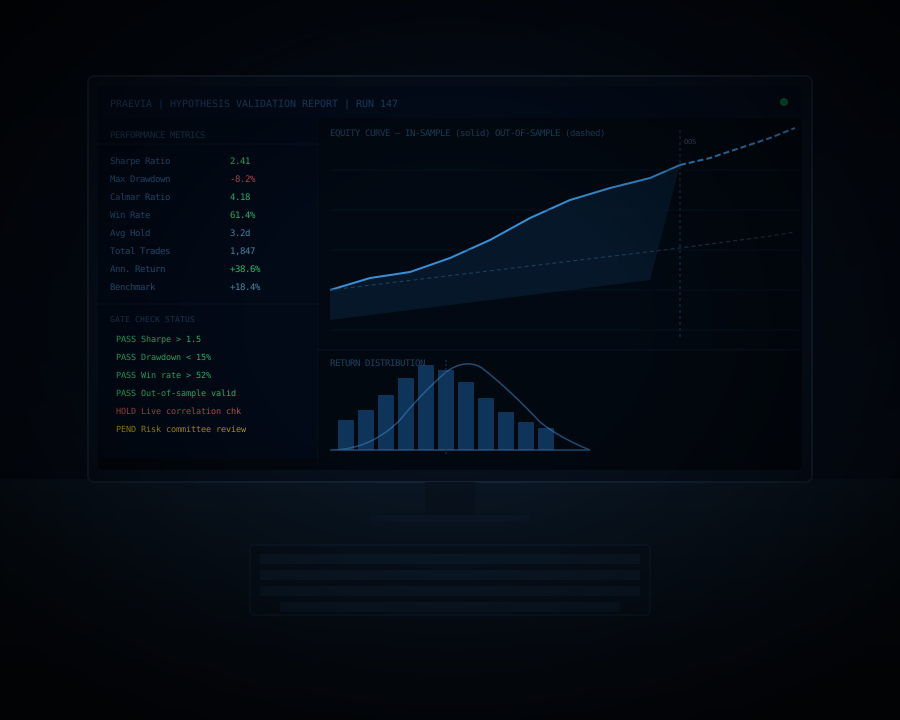
Every strategy hypothesis goes through a defined research and validation pipeline before it sees live capital. If it cannot survive that process, it does not get deployed. The bar is not negotiable.
The fastest trade is not always the right one. We have passed on setups that looked good because the signal quality did not meet the threshold. That kind of patience is what the process is for.
Rules exist to take bad options off the table when pressure makes them tempting. The system does not make every decision — it prevents the worst ones.
A standard that breaks down when volume increases was never really a standard. Everything we build is designed to hold as scope expands, not just for current conditions.
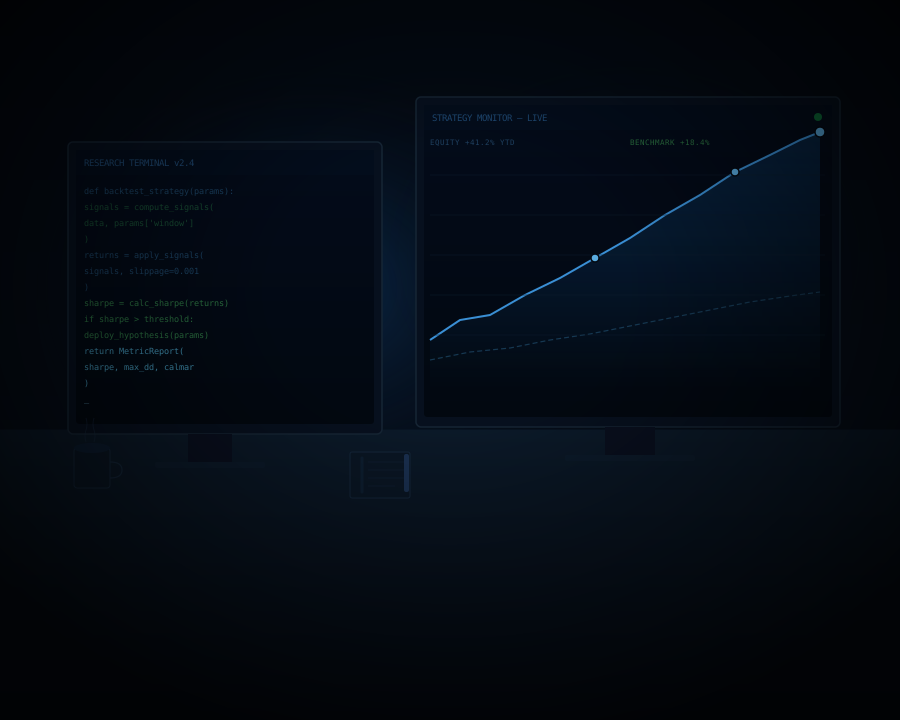
Noise in the research process shows up as noise in the portfolio. Infrastructure shortcuts show up as failures at inopportune moments. These connections are direct, even when they are not immediately visible.
The standard we hold is simple: every decision should be defensible — in the research, in the code, in position sizing, in how we communicate. If we would not want to explain a choice under scrutiny, we do not make it.
Strong standards turn ambition into something operable.